Flying cars, once the stuff of sci-fi comics and cinema, are now entering customers’ hands — at least in very small numbers. Of course, we already have flying vehicles, helicopters, for instance. They take off vertically and can land almost anywhere, but they are neither intended for the streets nor driven by a 9-to-5 worker to commute. Hence the need for something more consumer-type.
In 2023, Alef Aeronautics, a start-up from Silicon Valley, asked the Federal Aviation Administration (FAA) for special permission to test its flying vehicle, then called Model A. The FAA granted Alef a special airworthiness certification. In late 2025, Alef started producing its much-anticipated flying car, the Alef Model A Ultralight, with the first units expected to reach customers before Q2 2026.
What the Alef Model A Ultralight Actually Is
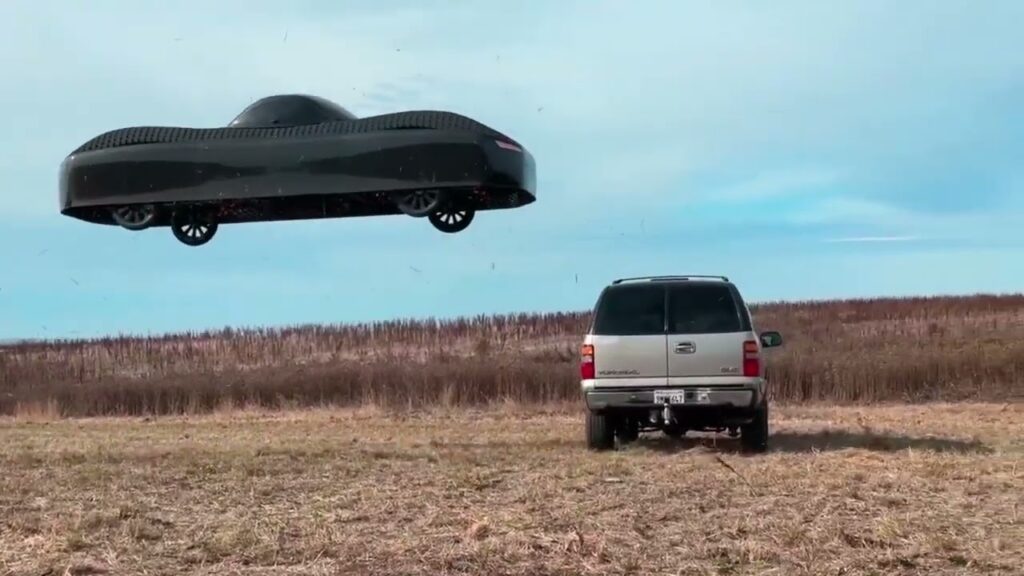
The Alef Model A Ultralight blends two traditionally incompatible worlds: road-legal driving and vertical flight. It’s a fully electric “drive-and-fly” vehicle designed to operate like an electric car on streets and, when needed, lift off vertically like a Harrier Jet.
On the ground, the Model A can travel around 350 km (220 miles), and, once airborne, it is capable of approximately 177 km (110 miles) of flight range. These are notable figures in the burgeoning electric aviation space.
This dual-mode design uses distributed electric propulsion and eight rotors that fold or shift to allow vertical takeoff and landing without a runway.
Road and Air Certification – What’s Approved and What’s Pending
Alef received approval from the FAA in 2023, the first for a roadable eVTOL vehicle. That permission, however, allowed only limited flight testing but not full commercial service. Once on the streets, the Model A will qualify as a low-speed vehicle, meaning it can’t exceed 40 km/h (25 mph) on public roads until it earns further verification from bodies such as the National Highway Traffic Safety Administration (NHTSA) – a process that has not yet concluded.
In short, flight testing is underway, the vehicle is being produced, but full road and air certification for unrestricted consumer use is still in progress. That’s a nuance many news outlets miss. You cannot just buy this flying car and commute to your job.

The Truth About Skills & Labour Shortages: Real Crisis or Corporate Fiction?

From Generative AI to Agentic AI: Businesses Advancing the Automation Frontier

Bossware, Bias, and Burnout: The Dark Side of AI in HR
BYD’s Five-Minute EV Charging Now Has a Faster Rival: CATL’s Shenxing 3 Battery
BYD’s Five-Minute Charging Breakthrough: Blade Battery 2.0

Circular Economy Models in Business and Manufacturing: How Companies Slow and Close Resource Loops

The Renewable Energy Transition: 5 Hidden Costs and Hard Truths

Micromanagement: How Excessive Control Destroys Trust, Productivity, and Talent

Ghost Jobs: Why So Many Job Listings Are Fake – and How They’re Wasting Your Time
Production Has Begun – But Don’t Expect Mass Delivery Yet
In December 2025, Alef publicly announced the start of production of the Model A Ultralight, assembled by hand at its California facility. These cars are being prepared for real-world, controlled testing with a small group of early buyers.
Production hasn’t yet hit the mass-manufacturing scale. Each vehicle takes time and craftsmanship to build, and Alef describes this phase as necessary to “fine-tune” the product before broader rollout.
Price, Demand, and the Pre-Order Picture
According to CNN, Alef said it has received approximately 3,200 pre-orders, translating to roughly $1 billion in interest at a list price near $300,000 per unit. These pre-orders range from small upfront deposits to priority placements, but remember that a pre-order deposit is not a firm sale until full payment and delivery are confirmed. This matters when talking about business forecasts.
Key Limitations – Realities Behind the Dream
Despite all the excitement, flying cars face real regulatory, technical, and infrastructure challenges.
- Road certification is not yet fully approved – NHTSA compliance is still required before it becomes a truly street-legal car.
- Flight operations will probably be restricted to specific zones and controlled airspace, not open skies over cities.
- Pilots (or drivers-in-flight mode) might need training and operational licensing.
Alef Aeronautics has crossed a worthy milestone: flying cars are no longer conceptual renderings. They are tangible machines being built and tested outside a lab. But saying they’re ready for every garage or urban commute would be premature. This is the intersection of the nascent aviation and automotive industries – exhilarating, complicated, and full of promise.