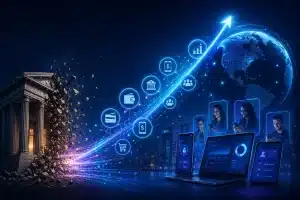
Embedded Finance: How Contextual Banking Is Replacing Traditional Banks
Embedded finance allows brands to offer payments, credit, and banking services without becoming banks, maintaining a seamless customer experience.
Embedded finance allows brands to offer payments, credit, and banking services without becoming banks, maintaining a seamless customer experience.

“Look back over the past, with its changing empires that rose and fell, and you can foresee the future, too." - Marcus Aurelius.

Employees believe that working on-site offers a greater chance of promotion than working from home, giving office-based workers an inherent advantage.
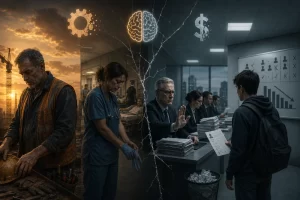
Although both exist, employer hiring, training, and wage policies are making the crisis worse. Here's what the evidence reveals.
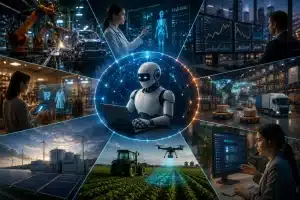
Businesses shift from Generative AI to autonomous agents that plan, act, and deliver results, reshaping workflows, productivity, and enterprise strategy.
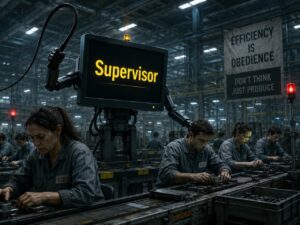
When AI becomes the boss, it screens candidates, monitors workers, and influences dismissals without any accountability. Are managers willing, trained, legally obliged, or ethically equipped to keep workers’ rights at the centre?

New research shows that Moringa seeds remove microplastics from drinking water as effectively as chemical treatments – and under certain conditions, even better.

CATL countered BYD’s 400 km five-minute benchmark with the Shenxing 3, capable of charging from 10% to 80% in a mere three minutes and 44 seconds.

As a gas, trichloroethylene (TCE) infiltrates your home and office, silently poisoning your brain cells and leaving you at risk of developing early Parkinson’s disease.

With BYD’s upgraded batteries and lightning-fast charging system, you could get around 400 km (250 miles) of range in just five minutes – nearly as fast as refuelling at a petrol station.

By fixing, reusing, and rebuilding products, and then recycling them, businesses can effectively reduce waste, get value back, and make solutions last longer.
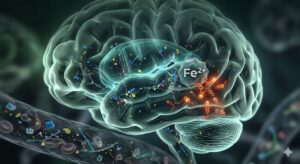
The number of people with Parkinson’s disease has doubled in the last 25 years. Micro- and nanoplastics are most likely to blame because they can build up in the brain and other organs.

The era of easy money driven only by hype is ending, shifting the focus towards proven financial returns and long-term viability.

Scientists are now investigating how microplastics behave inside the body and whether they may contribute to cancer risk.

This 'green' switch promises cleaner power, but below its surface it carries environmental, economic, and social costs that deserve closer scrutiny