A few weeks ago, Chinese carmaker BYD unveiled its second-generation Blade Battery and FLASH Charging system, claiming its upcoming EVs could charge from 10% to 70% in only five minutes and from 10% to 97% in nine minutes. Even in extreme cold, at -30 degrees Celsius, BYD asserted that the battery recharged from 20% to 97% in 12 minutes.
Moreover, the company said the new technology delivered more than 1,000 km of range under China’s CLTC, which is generally more lenient than the American EPA and European WLTP standards.
Regardless, such ultra-fast charging is already a striking claim. Five minutes of topping up, which delivers about 400 km of range, represents a massive engineering milestone and a psychological one.
But in technology, things move quickly. Very quickly.
In April 2026, CATL, the world’s largest EV battery maker and also a Chinese company, unveiled its third-generation Shenxing Superfast Charging battery. According to CATL, its new battery can charge from 10% to 35% in one minute, from 10% to 80% in three minutes and 44 seconds, and from 10% to 98% in six minutes and 27 seconds.
In other words, BYD’s nine-minute near-full charge was industry-leading for about a month.
Let’s review BYD’s technology before diving into CATL’s battery engineering.
Table of Contents
- BYD’s Blade Battery 2.0 and FLASH Charging
- CATL’s Shenxing 3: The Faster Counterpunch
- BYD vs CATL: A Simple Comparison
- BYD’s Advantage: It Builds the Cars Too
- The Atto 3 Evo
- The Real Battle Is No Longer Just the Battery
- What This Means for EV Buyers
- The New EV Era Has Begun, But Access Will Decide Everything
BYD’s Blade Battery 2.0 and FLASH Charging
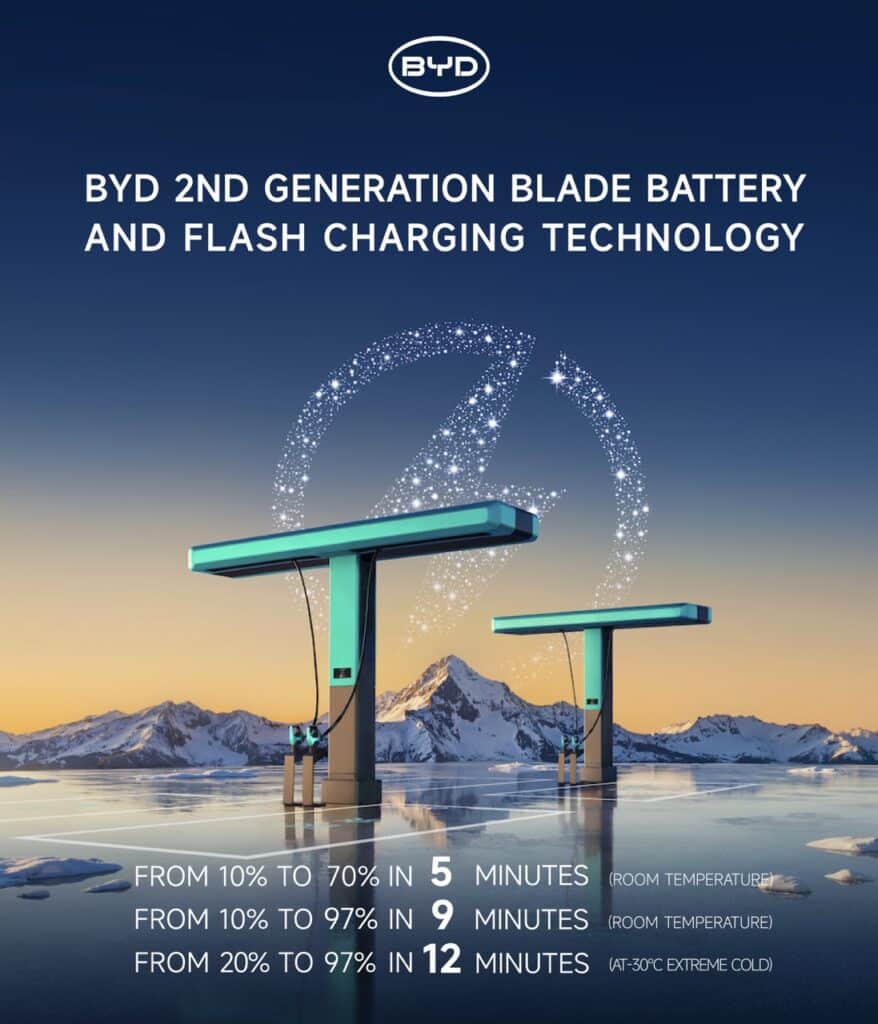
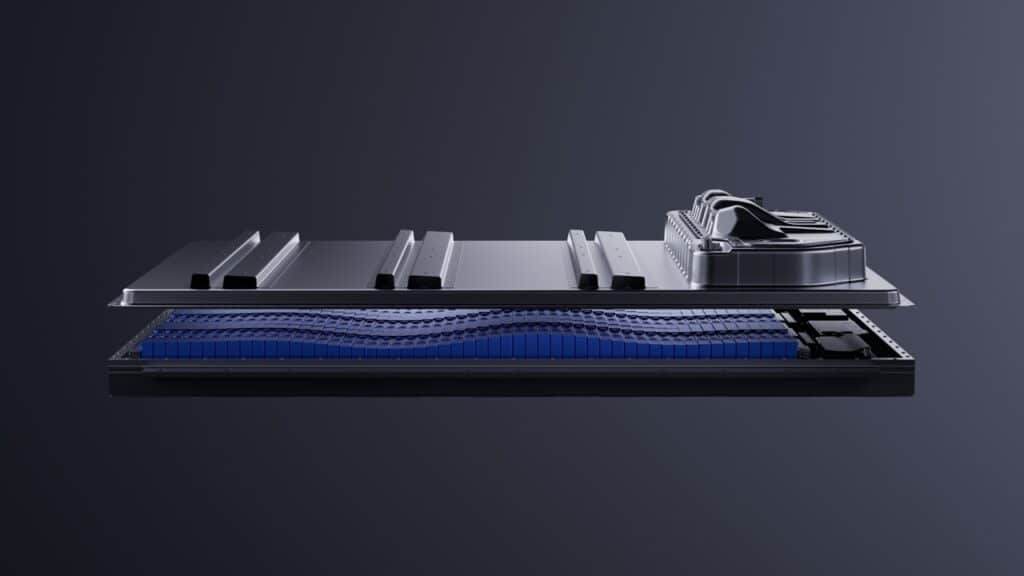
BYD’s breakthrough is built around two linked technologies: the second-generation Blade Battery 2.0 (BB2) and its 1,500 kW FLASH Charging system. BB2 continues to use lithium iron phosphate (LFP) chemistry, which is usually cheaper and safer than nickel-rich alternatives and also avoids cobalt and nickel, helping reduce costs and supply-chain concerns. At the same time, Blade 2.0 improves energy density by 5%, contributing to a vehicle range of up to 1,036 km in models like the Denza Z9GT.
To replenish batteries, BYD’s FLASH can transfer up to 1,500 kW through a single connector. For comparison, many current fast chargers in Europe and the US operate at 150 kW, 250 kW, or 350 kW, depending on the network and vehicle. To make that electric might usable, BYD is relying not just on thicker cables but on high-capacity energy storage in each FLASH station, allowing the charger to deliver a huge burst of power without placing the full strain on the local grid. To expand its reach, BYD plans to build 20,000 charging points in China and begin a broader rollout by the end of 2026.
Now, let’s take a glimpse at CATL’s response to BYD’s Blade Battery 2.0.
CATL’s Shenxing 3: The Faster Counterpunch
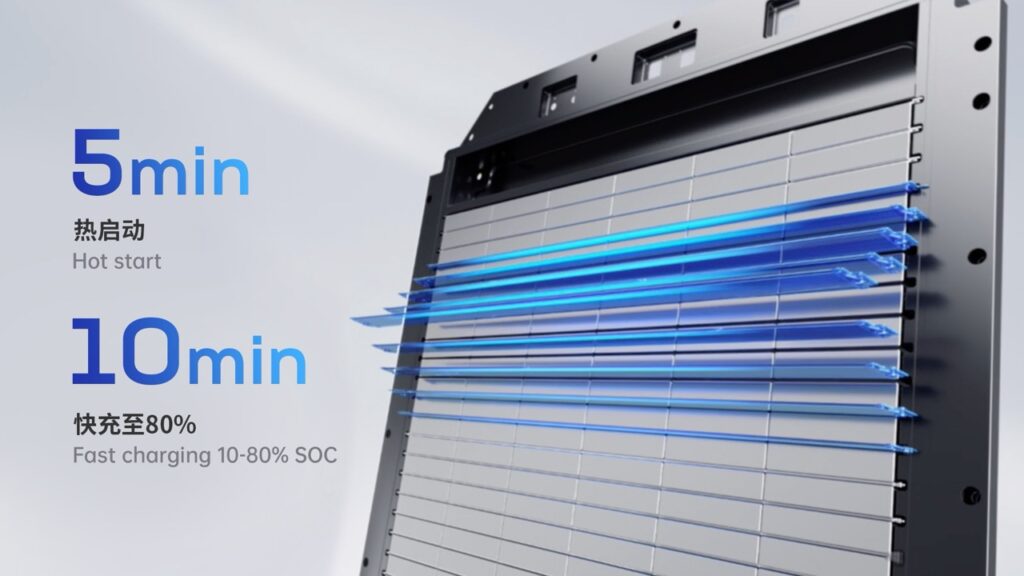
CATL’s new Shenxing 3 transforms the whole landscape. The battery is based on LFP chemistry and focuses heavily on high-speed charging and durability. The company affirms that this third-generation pack can charge from 10% to 80% in three minutes and 44 seconds and from 10% to 98% in six minutes and 27 seconds. Like BYD’s Blade Battery 2.0, Shenxing 3 performs well in extreme cold weather but powers up from 20% to 98% in about nine minutes at -30 degrees Celsius – around 3 minutes faster.
The real showstopper, however, is the Shenxing’s ability to retain 90% of its capacity after 1,000 full charge-discharge cycles. That matters because ultra-fast charging raises an obvious question: will charging this quickly damage the battery? CATL says its thermal-control approach reduces heat generation and improves heat dissipation, helping preserve long-term battery health.
BYD vs CATL: A Simple Comparison
| Technology | Chemistry | Claimed charging speed | Cold-weather claim | Range claim | Infrastructure strategy |
|---|---|---|---|---|---|
| BYD Blade Battery 2.0 + FLASH Charging | LFP | 10% to 70% in 5 minutes; 10% to 97% in 9 minutes |
20% to 97% in about 12 minutes at -30°C | More than 1,000 km in selected models under CLTC | 20,000 FLASH Charging Stations planned in China, with global rollout planned |
| CATL Shenxing 3 | LFP | 10% to 80% in 3 minutes 44 seconds; 10% to 98% in 6 minutes 27 seconds |
20% to 98% in about 9 minutes at -30°C | Not the main range-focused CATL product; designed around ultra-fast charging | Integrated supercharging and battery-swapping network |
| CATL Qilin 3 | NCM / ternary battery system | Supports 10C superfast charging | Not the headline claim | Up to 1,000 km; 280 Wh/kg cell energy density |
Premium long-range EV applications |
| CATL Qilin Condensed Battery | High-energy condensed battery | Not primarily positioned as the fastest-charging product | Not the headline claim | Up to 1,500 km in sedans and more than 1,000 km in large SUVs | Longer-range premium applications |
CATL is not only targeting charging speed. Its third-generation Qilin Battery aims at premium long-range EVs, with an alleged 280 Wh/kg cell energy density and up to 1,000 km of driving. The pack weighs 625 kg, which is 255 kg lighter than comparable LFP systems. The company also introduced a Qilin Condensed Battery with a 350 Wh/kg cell, claiming up to 1,500 km in sedans and more than 1,000 km in large SUVs.
BYD’s Advantage: It Builds the Cars Too
CATL may have landed a faster technological punch, but BYD has the upper hand: it makes cars, power electronics, batteries, and charging infrastructure. That vertical integration lets BYD move fast from laboratory claim to vehicle release. The Seal 08 is a prime example.
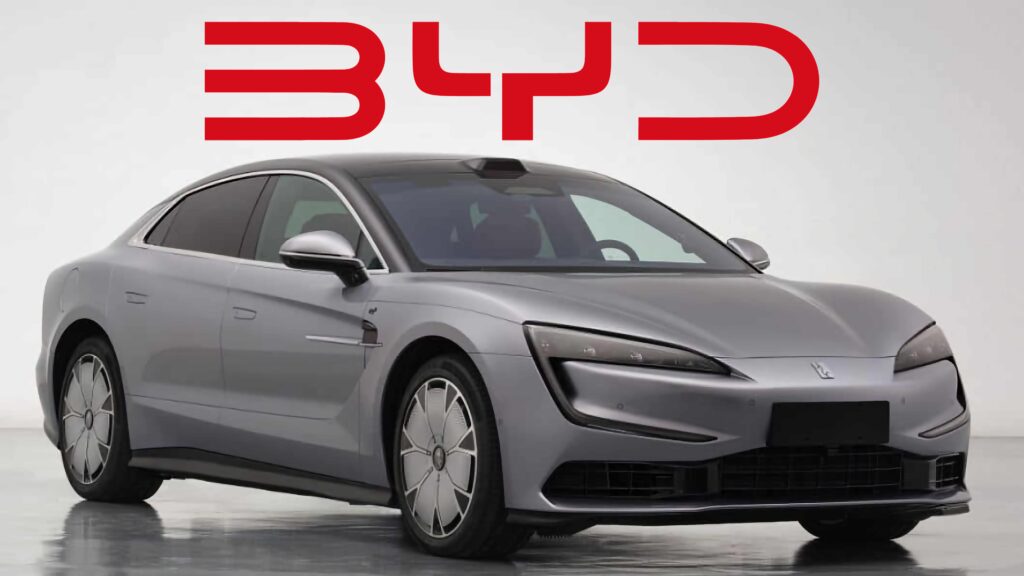
This large 1,000-km electric sedan, due to launch in China by the end of 2026, is built on an 800-volt platform and features BYD’s Blade Battery 2.0, which provides 400 km of extra driving range with a five-minute charge. Its dual-motor all-wheel-drive version produces a combined 510 kW, or around 684 hp.
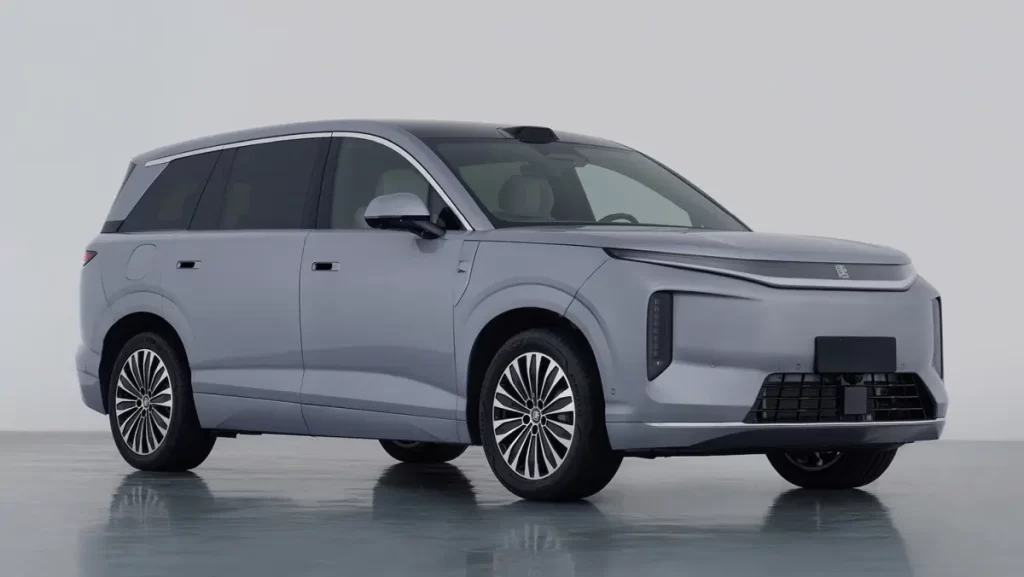
Then there is the Datang, BYD’s flagship electric SUV. After opening pre-sales at the Beijing Auto Show, BYD said the Datang attracted over 30,000 orders in 24 hours. The SUV is over 5.3 metres long, seats seven passengers, offers up to 950 km of CLTC range, and features BYD’s proprietary Blade Battery 2.0 and FLASH Charging architecture.
This is BYD’s genuine edge because breakthroughs need vehicles people can actually buy. A technology does not change the market when it appears in a PowerPoint slide, but when it arrives in a showroom, gets financed, is driven to work, and survives school-run chaos with juice boxes in the back seat.
Toxic Gaslighting: How 3M Executives Convinced a Scientist the Forever Chemicals She Found in Human Blood Were Safe

Big Tech Accused of AI ‘Greenwashing’

The Truth About Skills & Labour Shortages: Real Crisis or Corporate Fiction?

From Generative AI to Agentic AI: Businesses Advancing the Automation Frontier

Bossware, Bias, and Burnout: The Dark Side of AI in HR
BYD’s Five-Minute Charging Breakthrough: Blade Battery 2.0
The Atto 3 Evo
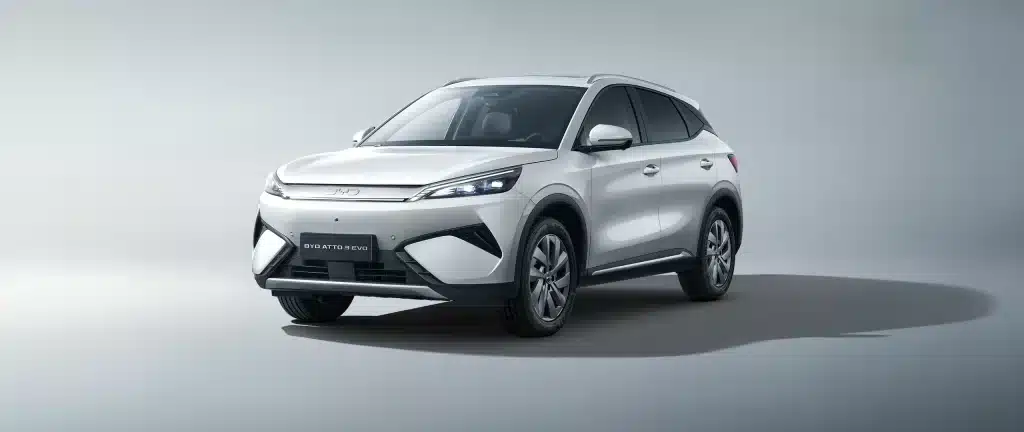
Not every new BYD model will include five-minute charging immediately, but the direction is clear: upgraded batteries are moving beyond luxury flagships. Look at the updated BYD Atto 3 Evo. It uses a 74.8 kWh Blade Battery with LFP chemistry and a Cell-to-Body structure, meaning the battery is integrated into the body as a load-bearing component. It features 510 km of WLTP (Worldwide Harmonised Light Vehicles Test Procedure) range in rear-wheel-drive and 470 km in all-wheel-drive form. Its DC charging power rises to 220 kW, cutting the 10% to 80% charge time from 44 minutes in the previous model to around 25 minutes.
That is nowhere near BYD’s headline five-minute FLASH figure, but it shows the same broader pattern: larger batteries, faster recharging, improved platforms, and better mainstream usability. The Atto 3 Evo is less about a lab record and more about everyday improvement.
The Real Battle Is No Longer Just the Battery
Beyond battery rivalry, this race offers unique interest. BYD and CATL are both building tech ecosystems.
BYD wants FLASH Charging stations, while CATL prefers a combined supercharging and battery-swapping system. CATL says all passenger “Choco-Swapping” and heavy-lorry “QIJI” swapping stations will be equipped with Shenxing supercharging systems, allowing those spots to operate as both exchanging points and high-power hubs. CATL plans to build 4,000 of them by the end of 2026 and more than 100,000 shared energy replenishment facilities in 2028.
A battery recharging in six minutes is impressive, but a countrywide network supporting millions of six-minute energising sessions is transformative.
Here is where many markets outside China might struggle. Ultra-fast charging requires grid capacity, energy storage, planning approval, real estate, standardisation, and vehicles that can accept the power. The battery may be ready before the infrastructure is.
What This Means for EV Buyers
For drivers, the message is encouraging but not simple. First, here’s the good news. Ultra-fast charging removes one of the biggest emotional barriers to EV adoption. That’s a fact. If an electric vehicle can add hundreds of kilometres of range in roughly the time it takes to refuel a petrol car, the argument against EVs becomes weaker.
Now, the shocking truth. The claims need real-world testing. Manufacturer data are based on ideal scenarios. Charging speed depends on battery temperature, energy output, software, and wiring design, as well as grid and cable conditions. Let us not pretend every public charger behaves like a Swiss watch.
CLTC (China’s measure for range) figures should be read with caution. They are useful for comparing Chinese-market vehicles, but real-world range in Europe, North America, or Latin America may be lower. Speed, weather, terrain, tyre choice, and driving style all matter.
Still, the trend is unmistakable. BYD’s Blade Battery 2.0 and CATL’s Shenxing 3 suggest that the old EV compromise – brilliant to drive, slow to recharge – is cracking.
The New EV Era Has Begun, But Access Will Decide Everything
BYD’s five-minute charging breakthrough was already a major moment for EVs. It showed that LFP batteries, long praised for safety and cost rather than outright performance, could enter an innovative chapter of ultra-fast charging. With Blade Battery 2.0, FLASH Charging, and models such as the Seal 08 and Datang, BYD is turning that technology into a vehicle strategy instead of keeping it as a laboratory trophy.
On CATL’s side, Shenxing 3 raises the stakes. By claiming a 10% to 98% charge in six minutes and 27 seconds, plus strong cold-weather performance and more than 90% capacity retention after 1,000 cycles, CATL has made clear that ultra-fast charging is not a one-company story. It is becoming an industry-wide contest, especially amongst Chinese giants.
But the winner won’t be decided by a battery spec sheet. It’ll be determined by availability, price, vehicle compatibility, networks, grid readiness, and whether ordinary drivers can use this technology without needing a luxury EV, a perfect charger, or the patience of a monk.
The big question is, once EVs charge as fast as petrol cars, when will that technology become accessible to everyone?