You can feel it when a business has crossed the line from “store” into “community.” People linger after buying something. They recognize each other. Conversations spill into the parking lot. Someone walks in and the staff already knows their order, their kid’s name, maybe even the rough week they just had. That kind of loyalty doesn’t come from discounts alone. It grows from familiarity, repetition, and tiny shared experiences that pile up over time until customers stop seeing themselves as outsiders. A lot of small businesses chase transactions because transactions are measurable, fast, and easy to explain on a spreadsheet, but community moves slower and sticks longer.
Table of Contents
People Return Where They Feel Seen
You probably already know your regular customers by face, even if you don’t realize how much that matters to them.
Most people spend their days moving through systems that barely acknowledge they exist, so when a business remembers them, the experience lands harder than owners sometimes expect. That emotional memory becomes part of why they come back. Research around local connections that drive loyalty often points toward something surprisingly simple: customers stay attached to businesses that make them feel socially rooted, not just commercially useful.
You see it in neighborhood coffee shops where strangers eventually start recognizing each other, or bookstores where the owner keeps handwritten recommendations behind the counter. Those details don’t scale cleanly, which is exactly why people remember them.
Community rarely begins with some giant campaign. Usually it starts with consistency, warmth, and the feeling that your business has become part of somebody’s weekly rhythm.
Events Give Customers A Reason To Gather

A lot of businesses misunderstand events because they think events need to feel enormous or polished. They don’t. Some of the strongest customer communities grow out of awkward little gatherings where people end up talking longer than expected.
Maybe you host a Sunday tasting, a beginner workshop, a seasonal launch night, or a casual after-hours meetup where customers can bring a friend. Ideas like hands-on workshops for regulars work because they shift the relationship away from pure buying behavior and into participation.
Once people participate together, the business stops feeling transactional. It starts feeling social. That’s a huge psychological difference. Customers who associate your space with friendships, rituals, or shared memories usually become far more forgiving, more vocal, and much harder for competitors to pull away.
Stories Create Emotional Gravity
Most small businesses spend too much time describing products and not enough time describing people. Customers remember stories because stories carry texture. They help someone imagine themselves inside your world.
Maybe a longtime customer met their business partner at your café. Maybe your bakery became the unofficial stop after local football games. Maybe a customer rebuilt their confidence after attending your classes every Thursday night for six months straight. That kind of emotional detail creates weight around a brand.
Approaches centered on community storytelling builds trust because they remind people they are joining something with history, personality, and recognizable human faces. You don’t need dramatic storytelling either. Tiny observations usually hit harder. A sentence about somebody staying late after an event talking with strangers can say more about your business than twenty polished marketing slogans ever could.
Shared Objects Become Shared Rituals

People underestimate how much physical objects shape memory. Think about how many routines in life revolve around mugs, shirts, notebooks, stickers, or little things people use without thinking.
A small business can quietly build belonging through those repeat-touch items. Coffee shops know this instinctively. So do breweries, gyms, and local nonprofits. Something as simple as mugs that you can customize can become part of a recurring customer habit, especially during events, loyalty programs, seasonal campaigns, or member-style experiences. A customer drinking from the same mug every morning isn’t just remembering your business consciously.
The brand slips into routine. That matters. Community often grows through repeated physical reminders that make customers feel connected even when they aren’t actively inside your store.

How Can Global Trade Contribute to World Peace?

Embedded Finance: How Contextual Banking Is Replacing Traditional Banks

The “Invisible Employee” Trap: 5 Surprising Realities of Proximity Bias in the Hybrid Era

The Truth About Skills & Labour Shortages: Real Crisis or Corporate Fiction?
Understanding Blockchain and Its Real-World Applications

How to Make Big Financial Changes in Just 30 Days and Build Momentum
Businesses Become Anchors Over Time
The strongest local businesses eventually become emotional landmarks. People recommend them because recommending them says something about who they are and what they value. That shift doesn’t happen overnight. It comes from showing up repeatedly, supporting local causes, collaborating with nearby organizations, and building recognizable patterns customers trust.
A lot of community-first business relationships succeed because they stop acting like isolated brands and start acting like neighborhood participants. Customers notice when owners attend local events, remember familiar names, or contribute to the surrounding community without immediately trying to monetize every interaction.
That restraint builds credibility. Ironically, businesses that obsess less over immediate conversions often end up creating deeper customer retention because people stop viewing them as interchangeable.
Conversation Matters More Than Broadcasting
Some businesses still treat communication like a megaphone. They post announcements, sales, and updates, then disappear until the next promotion. Community requires something messier and more human than that. It requires ongoing conversation.
Customers want acknowledgment. They want replies, recognition, inside jokes, follow-ups, and the occasional sense that somebody behind the account is paying attention instead of running automated scripts all day. Brands that focus on talking with customers consistently usually create stronger long-term engagement because customers begin contributing emotionally instead of remaining passive observers. That emotional participation changes behavior. People start defending your business online. They recommend you without being asked. They bring friends into the ecosystem voluntarily because the business starts feeling partially “theirs,” which is a powerful thing once it takes hold.
Shared Identity Outlasts Discounts
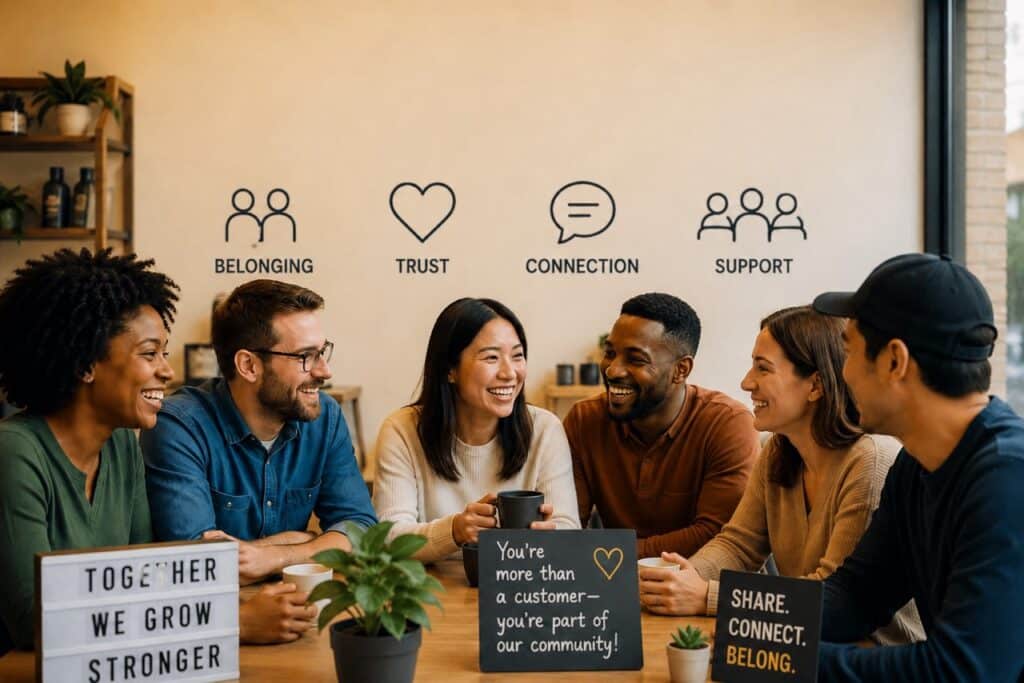
Discounts can attract attention fast, but identity creates staying power. Customers remain loyal to businesses that reflect how they see themselves or how they want to be seen by others. That’s why communities form around bookstores, fitness studios, hobby shops, local cafés, outdoor brands, and independent restaurants even when cheaper alternatives exist nearby.
Smart businesses understand they are helping customers express identity, routine, and belonging all at once. Discussions around brands creating lasting relationships often circle back to this exact idea: people stay where they feel emotionally recognized. A customer who feels understood becomes more patient during mistakes, more enthusiastic during launches, and more likely to remain attached during economic swings.
That attachment cannot be copied easily because it grows from accumulated emotional experiences, not marketing tricks.
Community Is Built In Small Repetitions
A lot of owners assume community arrives through one brilliant campaign, but it usually develops through repetition instead. It’s the owner remembering someone’s usual order. It’s the monthly meetup people quietly add to their calendar.
It’s the customer who keeps seeing familiar faces every Saturday morning until the place begins feeling woven into life itself. Those moments seem tiny while they’re happening, almost forgettable, yet together they create the emotional architecture customers carry around for years.