Every time you pour yourself a glass of water, you are almost certainly drinking plastic. Not visible chunks but the microscopic type, particles so small they drift through conventional filtration systems, entering your body and potentially contributing to inflammation, Parkinson’s disease, and even cancer. Those tiny fragments have appeared in human blood, brains, breast milk, lungs, placentas, and cancerous tumours.
Nowadays, the average person ingests between 39,000 and 52,000 plastic particles every year through food and drink alone. A figure that rockets to over 121,000 when you factor in the pollutants present in the air you breathe, according to research published in Environmental Science & Technology.
But an elegant, natural solution to this problem is emerging in Brazil, where a team of scientists has found that a common tropical plant could solve it.
To understand how this discovery works, we must first examine what these tiny particles are.
What Are Microplastics and Why You Should Worry
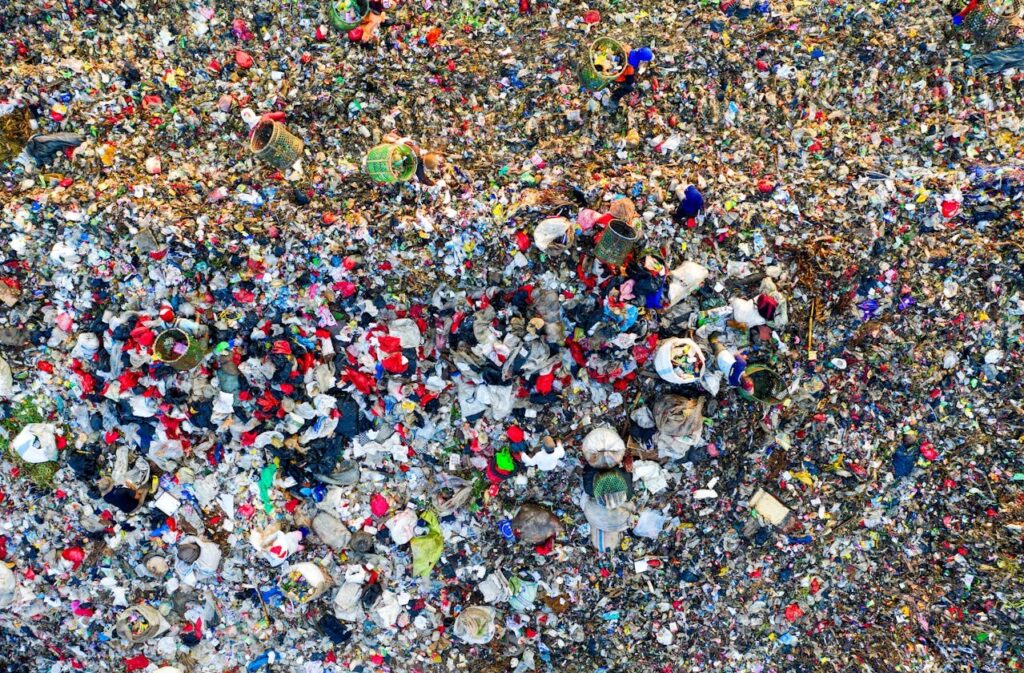
Microplastics are plastic shards smaller than five millimetres, though often much smaller, born from the breakdown of larger plastic waste in landfills and oceans. They have saturated every corner of the planet, from the deepest ocean trenches to Arctic ice, and their penetration of the human body is speeding up at an alarming pace.
A 2024 Cornell University study revealed a sixfold increase in global microplastic consumption since 1990.
The health picture is sobering. Research published in Molecular Cancer in 2025 links prolonged microplastic exposure to a cascade of biological harms: chronic inflammation, oxidative stress, DNA damage, and disruption of oncogenic signalling pathways associated with lung, colorectal, breast, prostate, and pancreatic cancers. As the American Cancer Society noted in December 2025, microplastics have been found at higher concentrations inside cancerous tumours than in surrounding healthy tissues.
So alarmed has the United States become that in April 2026, the US Environmental Protection Agency listed microplastics on its Contaminant Candidate List for the first time, alongside a $144 million federal programme – STOMP – to develop methods to detect and remove them from drinking water. In other words, the authorities officially confirmed what many of us already suspected: this is a genuine public health emergency.
Enter Moringa: Nature’s Ancient Water Purifier
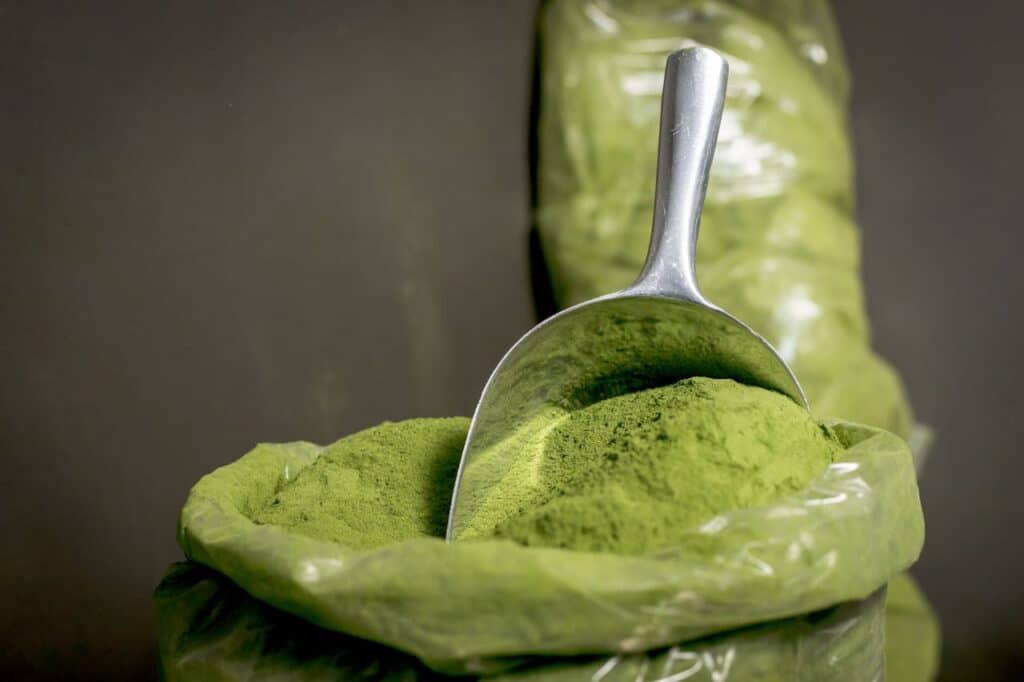
Moringa oleifera – also known as the drumstick tree or white acacia – is a fast-growing plant native to India that thrives spanning tropical and subtropical regions. Its leaves and seeds are prized as a nutritional powerhouse in much of Africa and Asia, brimming with vitamins, minerals, and proteins.
But for centuries, communities in the Nile Valley and across sub-Saharan Africa have used crushed Moringa seeds for something else: cleaning dirty water.
The science behind this traditional wisdom is straightforward. Moringa seeds contain cationic proteins, positively charged molecules that are drawn to the negatively charged particles of dirt, bacteria, and, as scientists have now discovered, microplastics. When those charges attract and bind, the contaminants clump together into large clusters, called “flocs”, that can then be physically filtered out. It’s molecular magnetism, if you will. And it works remarkably well.
Previous studies, including research published in Heliyon (2021), proved that Moringa seed powder achieves up to 99.5% turbidity removal and 97.7% colour reduction in wastewater.
At the same time, the Journal of Wildlife and Biodiversity confirmed that Moringa outperformed conventional alum in removing biological and chemical oxygen demand, as well as dissolved organic pollutants.

How a Health Administration Degree Opens Doors to Leadership in Healthcare
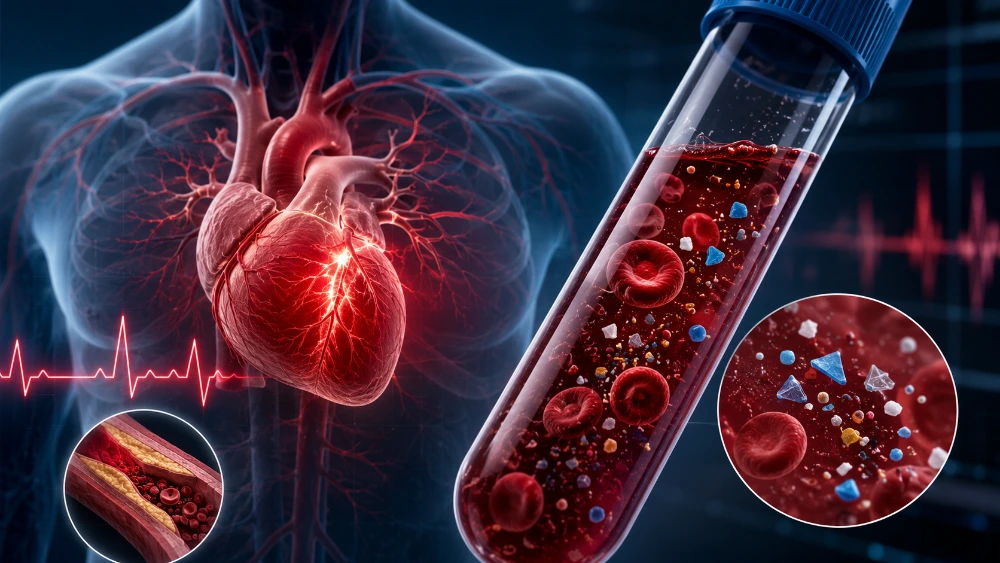
Do Patients Who Suffer Heart Attack Have More Micro and Nanoplastic in Their Blood? New Study Assessed

Can Ozempic Prevent Cancer? A Doctor Explains Why the Headlines Are Easy to Misread

The Government Knows The Real Climate Threat. Why Is It Hiding It?

Big Tech Accused of AI ‘Greenwashing’

Digital Surveillance is Breaking Activist Mental Health
Moringa vs Microplastics: The Breakthrough Research
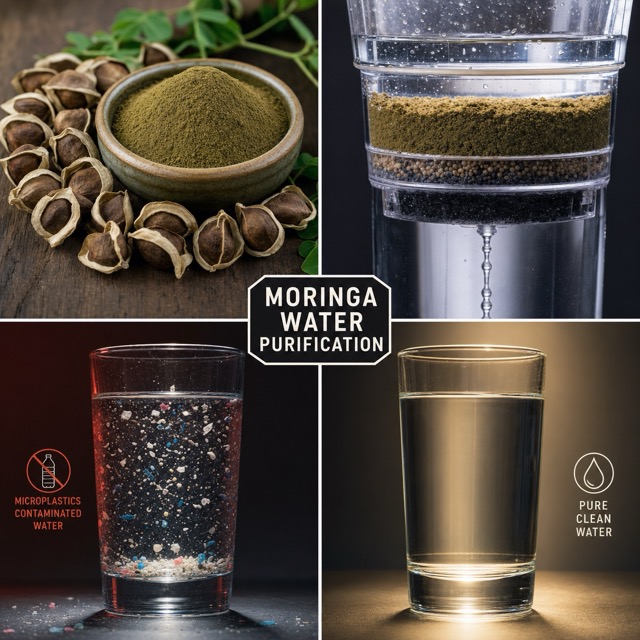
The latest and most significant study on this subject was published in ACS Omega, the journal of the American Chemical Society, in January 2026. Researchers at the Institute of Science and Technology of São Paulo State University (ICT-UNESP), Brazil, set out to address a very specific question: can Moringa seed extract remove microplastics from drinking water as effectively as aluminium sulphate – the chemical coagulant used in water treatment plants around the world?
The answer is yes. And under certain conditions, better.
The research team, led by Professor Adriano Gonçalves dos Reis and first author Gabrielle Batista, added polyvinyl chloride (PVC) microplastics to tap water. PVC was a deliberate and grim choice, as it is one of the most harmful plastics for human health, with known DNA-altering and carcinogenic properties and a persistent habit of surviving conventional water treatment.
To make the test more realistic, the researchers aged the PVC particles under ultraviolet radiation, mimicking the weathered state of microplastics found in the real world.
They then treated the contaminated water using a Jar Test system, a laboratory method that replicates the conditions of a small-scale water treatment plant, comparing a saline extract of Moringa seeds against standard aluminium sulphate. Here are the results:
- Both treatments delivered comparable microplastic removal rates, confirmed by scanning electron microscopy (SEM) particle counting.
- At pH 6.0, both coagulants achieved over 98.5% microplastic filtration.
- Moringa extract offered superior performance over a broader pH range (5.0-8.0), while aluminium sulphate’s effectiveness narrowed at higher pH levels (5.0-7.0 only).
- In increased alkaline conditions, Moringa outperformed the chemical standard.
In an interview with Science Daily, Batista said, “We showed that the saline extract from the seeds performs similarly to aluminium sulphate, which is used in treatment plants to coagulate water-containing microplastics. In more alkaline waters, it performed even better than the chemical product.”
Now, the team is testing Moringa seed extract on water drawn from the Paraíba do Sul River, which supplies the São José dos Campos region.
Why This Matters: The Problem with Aluminium Sulphate
If aluminium sulphate already works, why should we replace it? Because it is not biodegradable. It produces problematic dissolved organic matter that requires additional, expensive processing to remove. More concerningly, research spanning decades has pointed to a link between aluminium concentrations in drinking water and neurological diseases.
A landmark study in the American Journal of Epidemiology found that subjects exposed to saturations above 0.1 mg/litre in potable water had a relative risk of Alzheimer’s disease more than twice that of those with lower exposure. Another investigation indexed in the PubMed database reported a similar result.
In Europe, EU Directive 2020/2184 now requires strict controls on dissolved aluminium in treated water, a signal that the era of uncritical faith in aluminium-based treatment is drawing to a close.
Professor Reis explained, “There’s increasing regulatory scrutiny and health concerns regarding the use of aluminium- and iron-based coagulants, as they aren’t biodegradable, leave residual toxicity, and pose a risk of disease. For that reason, the search for sustainable alternatives has intensified.”
By contrast, Moringa is self-dissolving, produces no toxic residues, and carries no known neurological risks. It can even be prepared as a saline extract at home – one seed, properly processed, is enough to purify a litre of water.
Limitations and the Road Ahead
Researchers are candid about the limits of what we know so far. The increase in dissolved organic carbon that Moringa extract introduces into treated water remains a concern, in particular for larger-scale municipal applications where further processing would be needed to manage it.
We still need to investigate scalability, the consistency of coagulant quality from natural seed sources, and how Moringa extract behaves in various real-world water chemistries.
The study used PVC microplastics as the test contaminant. Actual water bodies contain a complex mixture of microplastic types, sizes, and degradation states, and whether Moringa performs equally well across all of them is yet to be verified. What the research does establish is viability. Moringa is not folk medicine anymore but a peer-reviewed, laboratory-confirmed candidate for sustainable water treatment. The next chapter belongs to engineers and policymakers, who must now translate these findings into scalable public health solutions.
We have spent decades engineering our way into the microplastic crisis, manufacturing billions of tonnes of plastic, discharging it into waterways, and then scratching our heads when it turns up in our bloodstreams. The remarkable point of this research is that nature quietly had a solution. We just weren’t paying enough attention.
Share this article to inform others about microplastic contamination in drinking water and the resulting health consequences. See you next time.