It’s truly remarkable that we are witnessing the rise of electric vehicles (EVs). While they were conceived before their petrol counterparts, it’s only recently that they have started to lead the roads. This surge in popularity is likely due to growing environmental awareness and the urgent need for greener energy solutions in the face of climate change. A common question about EVs relates to their battery lifespan. This is a fair concern since the energy pack, as the heart of an electric car, accounts for about 70% of the car’s value. But there are no easy answers to that. We don’t know exactly how long they will keep working because they have been around for just a handful of years. What we do know is that the potential costs of replacing these batteries once they reach the end of their useful life can be daunting. Let’s delve into the characteristics and typical life cycle of an EV battery.
Today’s Focus of Attention is reader-supported. We sometimes include products we think are useful for our readers. If you buy through links on this page, we may earn a small commission.
When Do EV Batteries Start to Deteriorate?
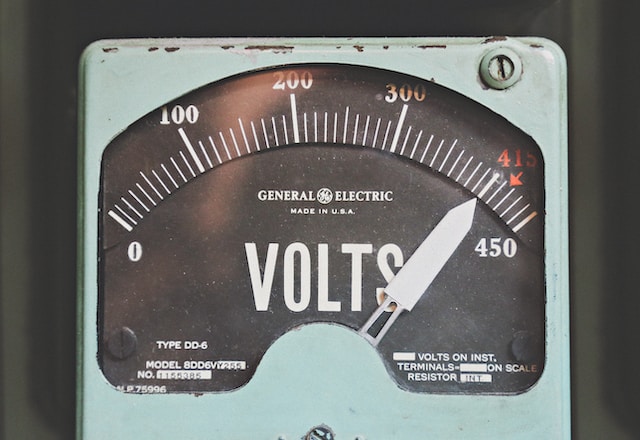
EV batteries, like all batteries, experience a decline in capacity over time at an average rate of about 2.3% per year. This means that an electric vehicle with a 100-km range could lose 2.3 km in the first year alone. This loss speeds up as the vehicle gets older, leading to a more noticeable drop as the years go by. Regular servicing helps determine whether your battery needs a complete replacement or a simple cell change. Compared to traditional vehicles, EV batteries tend to outlast many components in an internal combustion engine.
Real-World Example: A 380,000-Mile Tesla Model 3 Still Running on Its Original Battery
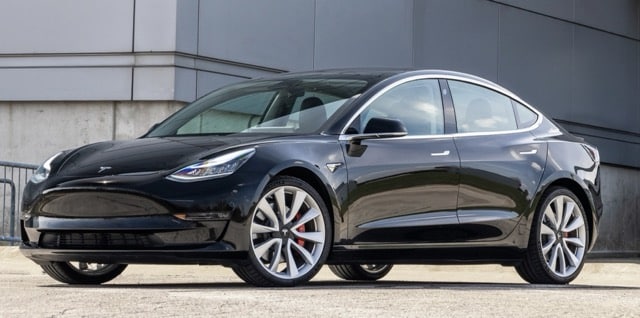
InsideEVs recently reported on a 2019 Tesla Model 3 Standard Range Plus in Canada that had covered over 380,000 miles, approximately 610,000 kilometres, while still using its original battery pack.
When fully charged, the car displayed 158 miles of range, down from 240 miles when new. That represents a loss of 82 miles, or 34.2% of its original displayed range.
That is a significant degradation, no question. However, the point here is that the car was not dead. In a highway range test at 68 mph, it still managed 138.3 miles before returning to the charger at 0%. InsideEVs noted that the car used 32.4 kWh during the test, well below the roughly 49 kWh it would have had originally, but still enough for commuting, urban driving, and shorter daily trips.
A caveat here. This example doesn’t prove that every EV battery will last 380,000 miles – one car is not a scientific sample. But it shows something useful: an ageing EV battery may become less capable long before it becomes useless.
Tesla’s current warranty also uses 70% battery-capacity retention as a key threshold for several Model 3 variants, giving buyers a practical benchmark when thinking about battery health. In plain English, range loss is real, battery replacement costs are real, and used-EV buyers should check battery health carefully.
Just remember: “degraded” does not always mean “finished”.
Battery Replacement Costs
Replacing an EV battery varies based on the car’s brand and battery size, typically ranging from $5,000 to $20,000. However, most warranties cover replacements for eight years or up to 160,000 km. After the warranty period, owners must choose between accepting a lower travel range or substituting the battery altogether. Given the high cost of new batteries, it’s likely that many prefer to live with a reduced range for as long as possible.

Big Tech Accused of AI ‘Greenwashing’

The Truth About Skills & Labour Shortages: Real Crisis or Corporate Fiction?

From Generative AI to Agentic AI: Businesses Advancing the Automation Frontier

Bossware, Bias, and Burnout: The Dark Side of AI in HR

BYD’s Five-Minute EV Charging Now Has a Faster Rival: CATL’s Shenxing 3 Battery

BYD’s Five-Minute Charging Breakthrough: Blade Battery 2.0

Circular Economy Models in Business and Manufacturing: How Companies Slow and Close Resource Loops

The Renewable Energy Transition: 5 Hidden Costs and Hard Truths

Micromanagement: How Excessive Control Destroys Trust, Productivity, and Talent
Second Life for EV Batteries and Recycling
While the EV battery recycling industry is in its infancy, some companies have begun to repurpose these power packs.
Nissan, for instance, uses old LEAF batteries to energise streetlights and backup data centres in Michigan. Global governments are requesting EV batteries be designed in a way to enable easy recycling so they can be upcycled or reused without the need to create new ones.
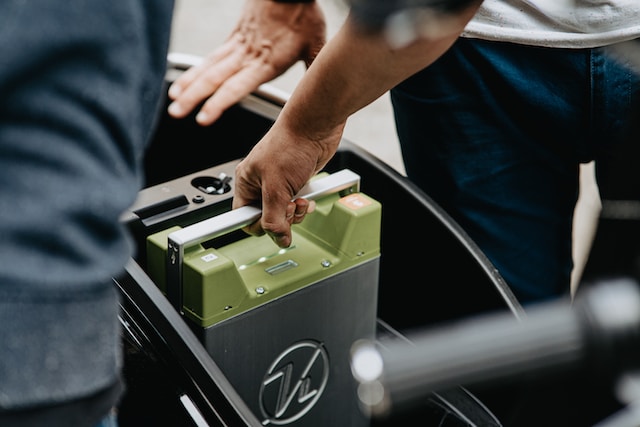
Batteries will eventually need replacing, but this should not discourage you from going electric. EV batteries are reliable, and advancements in technology promise to produce better, longer-lasting energy units. Such innovations may reduce replacement costs and extend the lifespan of EV batteries. The EVs you see on the roads today are still performing well with their original rechargeable batteries, although we can’t predict how long these batteries will last before they are replaced. But we are on track to discover.